
February 19, 2026
Staff Writer
Building Capability in a World Designed for Consumption
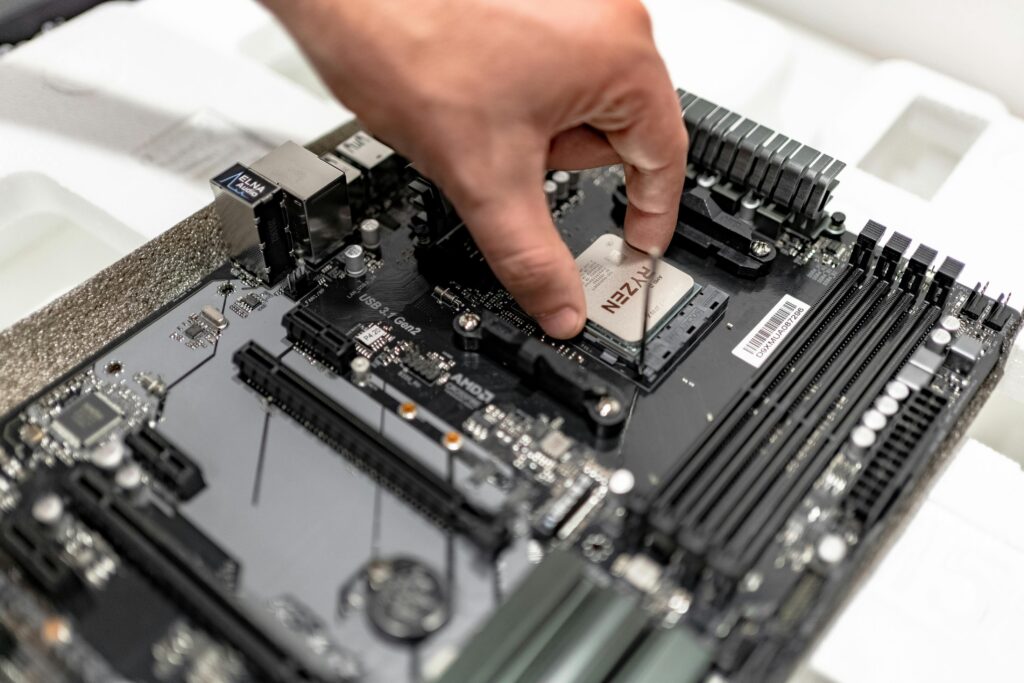
I began building computers as a young teenager, partly because at that time it was one of the only viable options. Buying a prebuilt system required a level of investment that many families simply could not justify. Building your own was not just an alternative. For many of us, it was the only realistic path.
I stayed with it for the next forty-five years not out of loyalty to the process, but because something within the process continued to resonate. It has never been entirely easy. Building a computer is not difficult by modern technical standards, especially when compared to constructing complex electronics from raw components, yet it occupies an interesting middle ground. If you have never done it before, it can appear intimidating. Once completed, however, the experience produces a quiet sense of satisfaction and, unexpectedly, a desire to do it again.
For me, building computers has been a lifelong journey through technology. As I have grown older and spent more time studying human behavior and psychology, I have found myself looking back on those years and recognizing that something deeper was taking place beneath the surface.
The Child Who Took Things Apart
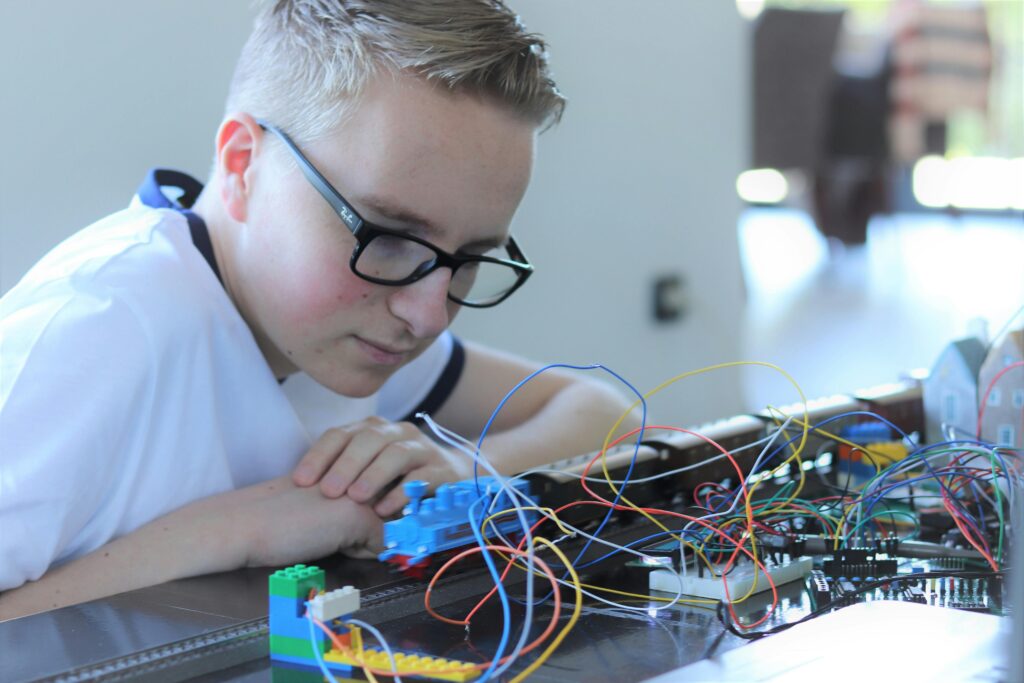
As a child, I was often described as destructive. If something had screws or removable panels, I would find a way inside. The curiosity extended beyond toys. Household objects, small appliances, and mechanical devices all seemed to invite examination.
Many parents, mine included, interpreted this behavior as problematic. Disassembling a toaster creates inconvenience. Replacing broken items costs money. Viewed from an adult perspective, the frustration is understandable.
What was not visible at the time was that this behavior represented an early form of learning.
I was engaging in tactile exploration. I was learning how objects were constructed and how components interacted. I did not yet understand electrical theory or circuit behavior, but I was building a foundation of familiarity. Years later, when I studied electronics formally, those concepts connected to something I had already experienced.
I was not attempting to destroy. I was attempting to understand.
Curiosity as a Cognitive Orientation
Individuals drawn toward technical understanding often experience the world through a lens of inquiry. Many people feel no desire to understand how systems function, and this is entirely normal. Society depends on diverse cognitive preferences.
Those of us drawn to systems thinking tend to pursue understanding with unusual persistence. We gravitate toward deep reading, reflective thinking, layered learning, and the pursuit of coherence.
We ask:
- How does this work?
- Why does it function this way?
- What happens if I change this?
- Can this be improved?
Curiosity is not a phase that we will outgrow. For many of us, it is an orientation toward life, something that will become a defining characteristic of our lives.
Encountering Early Computing
When I built my first computer, it was a 286. The motherboard, by today’s standards, appeared enormous. Memory chips were installed individually, requiring careful alignment. Static electricity was a real concern. Nothing about the process was automatic.
It represented a microcosm of technological engagement.
A teenager who once dismantled objects was now tasked with assembling something functional. This shift demanded discipline. It required research, patience, and attention. I learned about processors, memory, storage systems, tape drives, case selection, testing procedures, and installing early versions of DOS.
I was immersed. The state of focused absorption that emerged then has remained with me into my fifties.
Building as Creative Expression
Building a computer provides creative control. Within the limits of budget and compatibility, the builder determines nearly every aspect of the system.
Component selection becomes design. The processor, graphics card, memory configuration, cooling strategy, and enclosure aesthetics combine to form a personalized technological environment. One can construct a minimalist system, an illuminated showcase, or an unconventional themed build.
Your overall options for control of design and implementation are only limited by your imagination and resources.
This capacity transforms the computer from a commodity into a creative artifact.
When It Doesn’t Work the First Time
No one talks about the first boot attempt.
You press the power button and nothing happens. No fans, no lights, no reassuring hum of life. Just silence. You check the switch on the power supply. You reseat the RAM. You pull the graphics card and put it back in. You trace cables with your fingers, following each one like a trail you hope leads somewhere useful.
Time stretches. You wait patiently for a monitor to load. Then you hear that strange beeping that does’t sound quite right.
At some point, you step back, stare at the open case, and wonder if you just turned a pile of expensive parts into a very quiet paperweight. Then you find it. A connector not fully seated. A tiny detail overlooked.
You press the power button again.
This time, the fans spin. Yousmile as the monitor now displays a screen. There is no cheering. No dramatic music. Just a quiet exhale and the small, private relief of knowing the system is alive. Moments like that teach something that no manual ever explains.
Problems are rarely permanent. They are often precise.
Ownership and Pride of Craft
Constructing a system introduces a form of ownership distinct from purchasing a finished product. The builder participates in creation.
I built this. No one can take that accomplishment away from you.
This statement conveys more than possession. It reflects investment of effort, time, and learning. Pride in craftsmanship is not arrogance. It is recognition of meaningful effort. Anyone who has built something understands this distinction.
Creation fosters dignity. You’ve jopined a group who identify as builders and creators.
Learning Through Direct Engagement
Building a computer requires practical knowledge. Compatibility must be considered. Installation procedures must be followed. Configuration must be tested. Mistakes may result in delays or additional expense.
This learning is experiential rather than abstract. Knowledge acquired through direct engagement tends to endure.
Skill Building and Systems Thinking
The process cultivates skills that extend far beyond technology.
- Planning and logistics emerge while selecting and sourcing components.
- Financial decision-making develops when balancing performance against budget constraints.
- Patience becomes necessary when parts are delayed or systems fail to initialize.
- Troubleshooting fosters structured problem-solving.
- Technical literacy expands through installation and configuration.
Viewed holistically, building a computer resembles managing a complex project.
Goal Setting and Commitment
Deciding to build a computer establishes a clear objective. Ordering the components converts intention into commitment. Time is reorganized. Sleep is postponed. The system must be assembled, tested, optimized, and refined.
When the machine powers on successfully, a brief stillness often follows. Relief gives way to satisfaction.
That experience does not diminish with repetition. Instead, it deepens.
- Builders refine cable management.
- They explore optimization strategies.
- They adapt to emerging technologies.
Over time, they learn not only about systems, but about persistence, patience, and their own capacity to solve problems.
The Psychology of Self-Efficacy
Psychologist Albert Bandura described self-efficacy as the belief in one’s ability to succeed in specific situations. It is not confidence in the abstract. It is confidence built through experience.
Building a computer strengthens self-efficacy through direct mastery. Goal Setting, Commitment, and the Moment of Truth
Deciding to build a computer establishes a clear objective. Ordering the components converts intention into commitment. Time is reorganized. Evenings are reserved. Other tasks are postponed. The system must be assembled, tested, configured, and refined.
Then comes the first power-on. No one talks about that moment.
Confidence That Arrives Quietly
Building a computer does not transform a person overnight. It does not produce dramatic confidence or a sudden sense of mastery.
What it produces is more subtle.
The next time something technical goes wrong, you do not panic as quickly. You pause. You look. You think.
Perhaps this is solvable.
Perhaps I can figure it out.
That thought is small, but it alters your response to complexity.
Confidence rarely arrives as a declaration. It accumulates gradually through experience until one day you notice that complexity no longer feels threatening. It feels navigable.
Learning to Lean In Instead of Step Away
There was a time when a malfunctioning device meant frustration and avoidance. Something stopped working, and the safest response was to step away and hope someone else knew what to do.
Building changes that reflex.
Instead of retreating, you lean in. You remove the side panel. You look closer. You ask better questions. You begin to see structure where there once appeared to be confusion.
Curiosity replaces avoidance.
This shift is quiet, but it reshapes how you approach problems far beyond technology.
Opening the Case: Understanding Instead of Mystery
Modern devices are designed to be used rather than understood. Screws are hidden. Panels are sealed. Warranties discourage opening what you own. Replacement is encouraged. Repair is discouraged.
Building your own system interrupts this pattern.
When you open the case, you see airflow pathways and cooling logic. You see how components connect, how power moves, how heat disperses, how form follows function. Technology stops feeling mysterious and begins to feel structured and logical.
Understanding replaces hesitation.
Craftsmanship in Small Decisions
There is a physical rhythm to assembling a system. Cables are routed carefully to preserve airflow. Screws are tightened until secure but not forced. Components are seated evenly. Fingerprints are wiped from a glass panel before it is closed for the final time.
None of these steps are strictly required for the computer to function. The system would run without them.
They matter anyway.
Attention becomes visible in the finished build. Care becomes visible. Time becomes visible.
This is the quiet satisfaction of craftsmanship: not perfection, but intention made visible.
The Psychology of Self-Efficacy
Psychologist Albert Bandura described self-efficacy as the belief in one’s ability to succeed in specific situations. It is not confidence in the abstract. It is confidence developed through experience.
Building a computer reinforces this belief through direct mastery. You research, assemble, troubleshoot, and refine. Each obstacle resolved strengthens the understanding that complex problems can be approached methodically and solved.
Over time, that understanding transfers. You begin to suspect that other challenges in life may also be approached in the same way: with patience, structure, and persistence.
The Intrinsic Reward Loop
Building engages a powerful intrinsic reward cycle:
challenge → effort → obstacle → solution → success → confidence
This loop activates internal motivation. The builder is not driven by external rewards. The reward is the process itself and the mastery it produces.
This same loop drives creative work, endurance training, craftsmanship, and personal growth.
Resilience and the Willingness to Fail
Few first builds proceed without complications. Systems fail to boot. Components arrive defective. Connections are overlooked. Troubleshooting becomes necessary.
Each obstacle presents a choice: frustration or persistence. Something to think about, work on and overcome if needed.
Building teaches persistence. The process takes time, working with small screws and specialty tools in some cases. The ability to handle expensive parts with care.
It reframes failure as information rather than defeat. It teaches that problems are rarely final. They are puzzles awaiting resolution.
Resilience is not taught through comfort. It is learned through engagement with difficulty.
From Consumption to Participation
Much of modern technology encourages passive consumption. Devices arrive sealed, opaque, and designed for replacement rather than understanding. Prebuilt systems based on some random algorithmic “use-case ” scenario. But you’ve never fit into those single-use case guidelines.
Building a computer reverses this pattern. It restores transparency and fosters comprehension. Cause and effect become visible. Repair and modification become possible. You become an active participant in your own journey through technology.
Dependency gives way to capability. Self-confidence builds with accomplishment. The journey builds up your character.
You move from asking, “Can I use this?” to asking, “How can I build what I need?”
What Building Actually Builds
At some point, you realize that you did not simply build a computer.
You built patience.
You built persistence.
You built problem-solving habits.
You built the confidence to approach complexity rather than avoid it.
The machine sits on your desk. It looks back at you with a gleaming new case, well-lit fans, and a presence that makes you smile. Waiting in anticipation of what you will do next, it remains an ever constant reminder that you took on a major project and completed it.
The capability remains with you.
Identity and the Maker Mindset
At some point, an identity shift occurs. You realize that you are not the same person you were when you began this project.
Before you started, you likely thought: “I’m not technical.”
After you’ve completed this build, you realize: “I can figure things out.”
This shift rarely remains confined to the relam os personal computers. It extends into every other area of life. You can take these skills to every future job, business, or career path for the rest of your life. The builder in you begins to approach challenges with curiosity rather than avoidance.
The mindset changes from consumer to participant.
Craftsmanship in a Disposable World
We live in an era defined by disposability. Devices are replaced rather than repaired. Systems are hidden behind sealed enclosures and proprietary designs.
Building stands in quiet opposition to this trend.
- It represents patience in a culture of immediacy.
- It represents understanding in a culture of abstraction.
- It represents craftsmanship in a culture of convenience.
To build is to participate in the world rather than merely consume it.
More Than Hardware
Building a computer is not merely technical work. It cultivates autonomy, competence, and confidence. It reinforces the capacity to engage with complexity rather than avoid it.
It begins with components and connectors. It ends with a strengthened sense of agency.
And once experienced, that sense of agency rarely remains confined to technology.
A Lifelong Zone
I was in my zone when I built that first system. Decades later, I still am.
The tools have improved. The hardware has evolved. The process has become more accessible.
The psychology remains unchanged.
There is still curiosity.
There is still learning.
There is still the quiet satisfaction of creation.
And there is still that moment, when the power switch is pressed and the system comes to life, that reminds me why I began in the first place.
Share
Recent Posts

Camp Daily Wins Character Profile – Gunter Pig
March 26, 2026
Home → Camp Daily Wins → Gunter Pig → Profile When your child struggles to believe in themselves, Gunter Pig helps them see...

Camp Daily Wins Character Profile – Stu Donkey
March 26, 2026
Home → Camp Daily Wins → Stu Donkey → Profile When your child wants to give up, Stu Donkey helps them learn how...

The Journey Doesn’t End When the Pages Do
March 24, 2026
Home → Camp Daily Wins → What Happens Nest? → Journey Doesn’t End Camp Daily Wins isn’t about finishing a journal. It’s about...