
December 12, 2025
Staff Writer
A Four-Part Series on Development, Capacity, and Modern Human Complexity
Series Overview
Rethinking Psychological Evaluation in a High-Entropy World
Why Legacy Frameworks Require Recalibration, Not Rejection
Introduction
Psychological evaluation has long relied on frameworks developed in the twentieth century, many of which remain conceptually robust and widely taught. These models were built using the best methodologies available at the time and continue to offer valuable insight into human development, identity formation, and psychosocial tension.
However, the environments in which these frameworks are now applied differ profoundly from those under which they were originally developed. Modern life is characterized by sustained instability, neurological variability, fragmented social structures, and prolonged exposure to stressors that were once episodic rather than continuous.
This series examines the growing gap between theories that remain valid and evaluative practices that no longer reflect baseline human conditions.
The Core Question
The central question guiding this series is not whether foundational psychological theories are “wrong.”
It is this:
At what point does continued reliance on legacy evaluation methods produce distortion when the environments they assess no longer resemble those in which they were validated?
This distinction matters because evaluation shapes outcomes. Educational placement, clinical diagnosis, institutional access, and self-concept formation often depend on assessments treated as objective measures of ability or development. When those assessments fail to account for modern complexity, the cost is borne by individuals, not theories.
From Critique to Construction
This series unfolds in three movements, each building on the previous:
- Part I examines methodological drift — the quiet divergence between evaluative frameworks and contemporary environments.
- Part II explores the critical distinction between evaluation and capacity, showing how observable performance under constraint often misrepresents underlying potential.
- Part III proposes a modernized evaluative framework that preserves foundational theory while explicitly accounting for environmental load, neurological variability, and non-linear development.
Together, these pieces form a coherent argument:
psychological evaluation must evolve not by discarding its foundations, but by recalibrating how they are applied.
Why This Matters Now
Modern societies increasingly treat psychological evaluation as definitive rather than provisional. Labels harden early. Expectations narrow quickly. Adaptive responses to stress are often misclassified as dysfunction.
At the same time, advances in neuroscience, trauma research, and developmental psychology have revealed just how context-dependent human expression truly is.
The mismatch between what we know and how we evaluate has become too large to ignore.
What This Series Is — and Is Not
This series is:
- a methodological critique, not a personal attack
- a constructive proposal, not a rejection of legacy theory
- grounded in psychology, not ideology
- written for readers comfortable with nuance and complexity
It is not:
- an argument against assessment itself
- a call to abandon foundational thinkers
- a simplification of human development
The goal is precision, not polemic.
Series Structure and Release Plan
This four-part series will be released as follows:
- Part 0 (This Overview): Framing the problem and the arc
- Part I: Methodological Drift in Psychological Evaluation
- Part II: Evaluation Is Not Capacity
- Part III: Toward a Modernized Framework for Psychological Evaluation
Each piece stands on its own, while contributing to a unified whole.
Closing Note
Psychological theories do not become obsolete simply because time passes. But evaluative certainty can become dangerous when it outlives the conditions that once justified it.
This series invites a more careful, context-aware approach to understanding human development in a world that no longer conforms to twentieth-century assumptions.
Share
Recent Posts
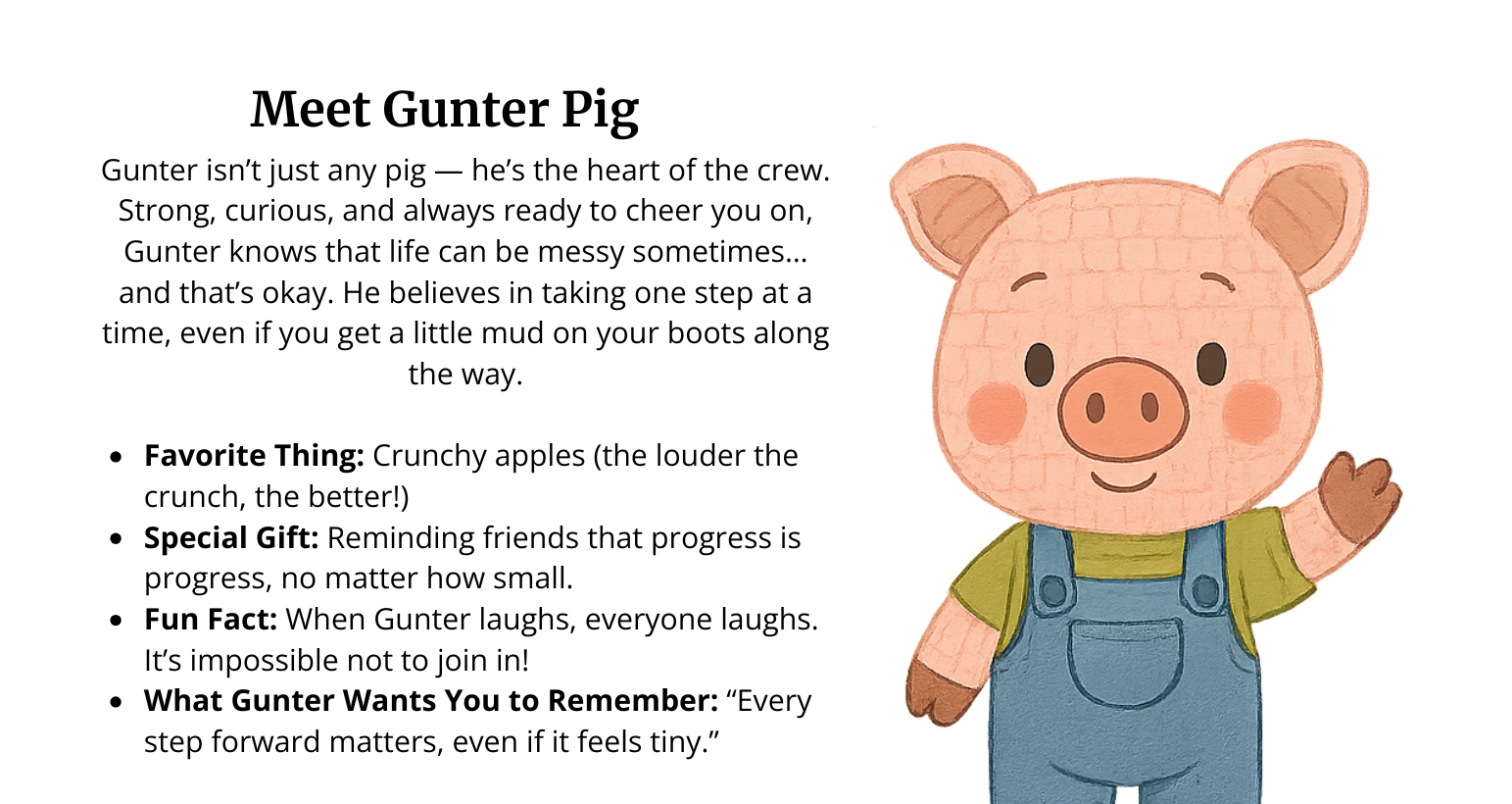
Camp Daily Wins Character Profile – Gunter Pig
March 26, 2026
Home → Camp Daily Wins → Gunter Pig → Profile When your child struggles to believe in themselves, Gunter Pig helps them see...
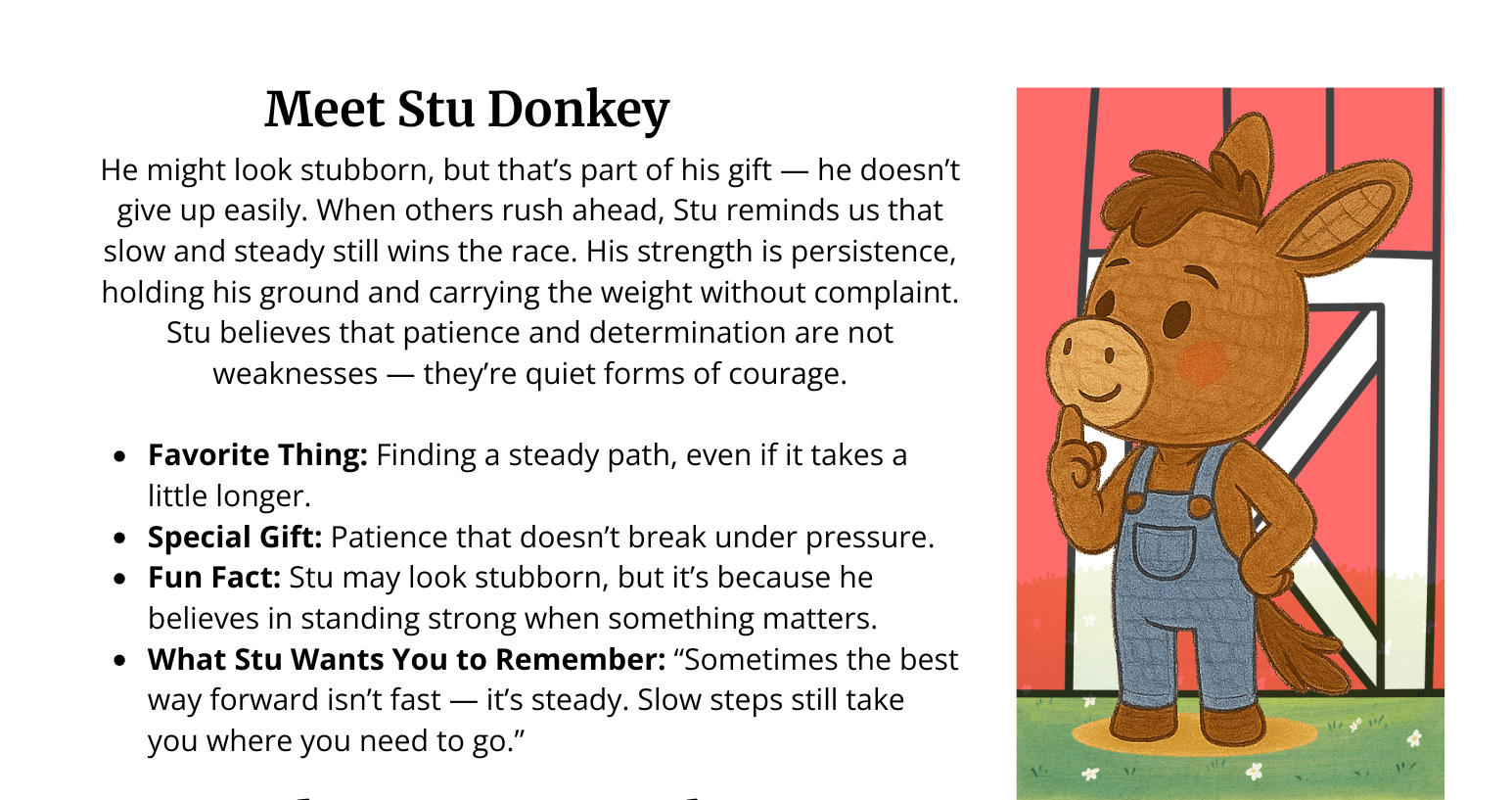
Camp Daily Wins Character Profile – Stu Donkey
March 26, 2026
Home → Camp Daily Wins → Stu Donkey → Profile When your child wants to give up, Stu Donkey helps them learn how...

The Journey Doesn’t End When the Pages Do
March 24, 2026
Home → Camp Daily Wins → What Happens Nest? → Journey Doesn’t End Camp Daily Wins isn’t about finishing a journal. It’s about...