Why AI Cannot Detect Emotional Nuance in Children
Understanding the limits of text based systems in emotional assessmentChildren rarely communicate emotional distress in clear, direct language. A child who is struggling rarely says “I am experiencing depression” or “I am feeling emotionally unsafe.” Instead, distress appears in far more subtle ways. It may surface through hesitation, humor that feels slightly misplaced, or a sudden change in behavior that adults notice but cannot immediately explain.
Human professionals who work with children are trained to observe these signals. A therapist does not only listen to what a child says. They observe how the child sits, whether the child avoids eye contact, how quickly answers are given, and whether tone or body language conflicts with the words being spoken.

Understanding the Issue
Artificial intelligence systems do not have access to those signals. They process text. Even the most sophisticated conversational systems operate by analyzing written language and predicting likely responses. They cannot see posture. They cannot hear hesitation. They cannot observe emotional shifts in real time.
This difference is important for parents to understand. AI may appear responsive or thoughtful during a conversation, but it does not perform an emotional assessment. It processes language, while trained clinicians assess people.
Children Rarely Communicate Emotion Directly
Children often communicate emotion indirectly. In many cases, they do not have the vocabulary or confidence to express distress openly. Instead, they rely on forms of communication that require interpretation.
A child who feels overwhelmed may use humor to deflect serious feelings. Sarcasm can sometimes mask anxiety or embarrassment. A simple statement such as “I’m fine” may actually signal the opposite when spoken with a flat tone or visible frustration. Some children minimize serious experiences because they worry about being a burden or fear the reaction of adults around them.
Indirect language can also appear in references to hopelessness or self-harm that are vague or ambiguous. A comment that appears casual on the surface may carry deeper meaning when viewed in context. Skilled clinicians learn to recognize these forms of communication by listening for inconsistencies between words and emotional presentation.
AI systems do not interpret those inconsistencies. They analyze patterns within text. If the words appear calm, the system assumes a calm meaning. If humor appears in a sentence, the system reads humor as the primary signal. The deeper emotional layer behind the statement is not accessible to the model.
This distinction highlights a key limitation. Emotional communication often relies on incongruence between what is said and how it is expressed. AI reads the words. Human professionals read the mismatch.
Human Example of Communication Barriers
Parents who have raised children with speech delays or hearing impairments often understand this challenge very clearly. Even within a loving and attentive household, communication can be difficult when a child is still developing the ability to express needs verbally.
For example, a child who experiences hearing impairment or delayed speech development may struggle to form words clearly. Parents may recognize that the child is frustrated or upset, yet the specific need behind that frustration may remain unclear. In many cases, the child is attempting to communicate something important, but the words themselves do not carry enough clarity to convey the message.
In those moments, parents rely on far more than language. They observe facial expression, body posture, emotional intensity, and patterns of behavior. A parent may recognize the look of frustration, the way a child gestures toward an object, or the subtle cues that suggest a misunderstanding has occurred. Communication becomes a process of patient observation and repeated attempts to understand.
Even with this level of attentiveness, resolving the misunderstanding can take time. Parents may try several interpretations before identifying the real issue. What matters is the human capacity to read emotional cues and remain engaged in the effort to understand.
A text-based AI system would not have access to any of these signals. If the words themselves are unclear or incomplete, the system has no way to interpret the frustration, the gestures, or the emotional cues that help parents piece together meaning. The system only receives text, while human communication involves a much richer set of signals.
Emotional Signals Are Often Nonverbal
Much of emotional assessment depends on information that is not spoken at all. Nonverbal signals provide context that helps professionals understand a child’s emotional state.
These signals include facial microexpressions that reveal tension or discomfort. Eye contact patterns can suggest confidence, avoidance, or fear. A child who maintains unusually flat emotional expression may be displaying what clinicians refer to as flat affect. Voice tremor can indicate anxiety even when the words themselves sound neutral.
Behavioral cues are equally important. Changes in pacing, withdrawal from conversation, or a sudden reduction in energy may signal distress that words do not fully capture. Environmental context also matters. A clinician may notice how a child interacts with parents, how they respond to simple questions, or how their behavior shifts when discussing certain topics.
Professionals who work with children build an understanding of baseline behavior. Over time, they learn what is typical for a particular child. Emotional risk often becomes visible when behavior begins to deviate from that baseline.
AI systems have no access to these signals. They cannot observe posture, facial expression, or movement. They do not build behavioral baselines across personal interactions. Without those layers of information, emotional nuance becomes invisible.
Children Communicate Differently at Each Stage
Children are not simply smaller versions of adults. Emotional development changes dramatically across childhood and adolescence, and communication styles shift as cognitive maturity grows.
Younger children often lack the vocabulary needed to describe complex emotional states. Abstract thinking continues to develop throughout childhood, which means a child may feel distress without having the language to explain it clearly. Emotional reactions may appear exaggerated or inconsistent because developmental regulation is still forming.
Trauma responses also vary by age. A younger child might display distress through behavioral changes such as irritability or withdrawal. An older adolescent might express similar distress through sarcasm, detachment, or sudden shifts in identity. These patterns require interpretation that considers developmental stage, family context, and personal history.
Trained clinicians adjust their approach based on these developmental differences. They modify their language, observation style, and assessment methods to match the child in front of them.
AI systems do not adapt in this way. They generate responses based on patterns learned from large collections of text. While those responses may appear thoughtful, they do not represent real-time developmental understanding.
How Professionals Recognize Emotional Patterns
Artificial intelligence relies on pattern recognition. When a person writes a sentence, the system analyzes the words and predicts the most likely continuation of that conversation based on its training data.
Clinical judgment operates differently. A trained professional evaluates the emotional state of a child by combining multiple forms of information. Words are considered alongside tone, behavior, history, and situational context. The goal is not to predict the next sentence but to understand the meaning behind what is being expressed.
AI systems may react to specific keywords that suggest distress. These reactions often occur through automated safety guardrails designed to reduce risk, which can escalate conversations even when emotional context is unclear.
Clinicians assess severity and credibility in a much deeper way. They evaluate whether statements reflect temporary frustration, developing emotional distress, or immediate risk. They consider patterns over time and determine whether intervention is needed.
The difference is structural. AI predicts language. Professionals assess mental state.
Example of Tone and Context in Teen Communication
Teenagers often communicate in ways that rely heavily on tone and context. A sentence that appears harmless when written can carry a very different meaning when spoken in person.
Imagine a teenager saying the phrase “Yeah, everything is great” after a difficult day at school. If those words appear in text alone, they look positive and reassuring. However, when spoken with a flat tone, eye contact avoidance, or visible frustration, the same sentence may signal the opposite. A parent or counselor observing the interaction would notice the mismatch between the words and the emotional presentation.
In many families, this type of exchange is common. A parent may pause and ask a follow-up question because the emotional tone suggests that something deeper is happening. The conversation may then open into a more honest discussion about stress, conflict with peers, or academic pressure.
A text-based AI system does not have access to those signals. The system receives the words “everything is great” and processes them at face value. Without tone, posture, facial expression, or relational context, the deeper emotional meaning disappears.
This difference illustrates why emotional assessment cannot rely on text alone. Human communication depends heavily on signals that exist outside of language.
Why This Matters for Parents
Parents sometimes assume that if a child is speaking with an AI system, that system is capable of recognizing emotional risk. The interaction can feel conversational and supportive, which may create the impression that meaningful evaluation is taking place.
In reality, AI is not assessing the emotional health of the child. It is responding to language in a conversational format, which can sound supportive even though it reflects simulated empathy rather than real human emotional attunement.
This does not make AI harmful or useless. It simply means that the technology serves a different role than many people expect.
Parents remain the primary observers of their children’s emotional well-being. Human relationships, attentive listening, and professional care when needed continue to play the central role in identifying and responding to emotional challenges.
A Simple Example
A child might type the words “I’m okay” into a screen.
To an AI system, those words appear calm and reassuring.
A parent sitting in the same room might notice something very different. Quiet voice. Slumped posture. Eyes that avoid contact. In that moment, the words matter less than the signals surrounding them.
Those signals are where emotional understanding begins.
The Key Takeaway
Artificial intelligence can be a helpful tool for education, reflection, and conversation. It can provide information and offer general guidance on many topics. In the right context, it can support curiosity and learning.
What it cannot do is observe the subtle signals that reveal how a child is truly feeling. Emotional nuance lives in tone, behavior, facial expression, and personal history. Those elements require human perception and judgment.
For parents, the most important understanding is simple. AI can assist with conversation, but it cannot interpret the emotional reality of a child’s life. Responsibility for that understanding remains where it has always belonged, within attentive relationships between children, families, and trained professionals.
Supporting Children in a Changing Digital World
Technology will continue to evolve, but children still rely on human relationships, guidance, and attentive adults to understand their emotions and experiences. Artificial intelligence can support learning, curiosity, and conversation, but emotional understanding still lives within human connection. Parents, caregivers, and educators remain the most important observers of a child’s emotional well-being.
Parent Resource
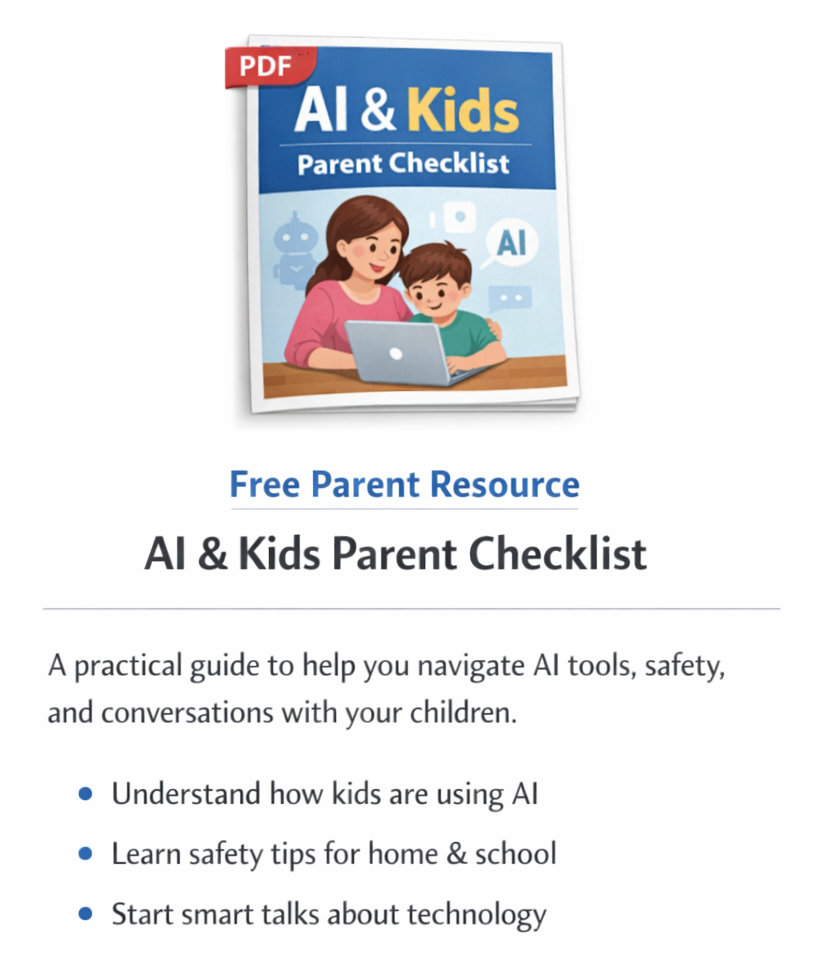
Parents looking for practical guidance can download the AI and Kids Parent Checklist, a short guide outlining simple steps for navigating AI tools, conversations, and digital environments with children.
You can find the free checklist in the sidebar on this page.
About This Resource
This article is part of the AI and Kids Resource Series, created by Your Enduring Purpose (YEP) to help families understand emerging technology and its impact on children. These resources are designed to support thoughtful conversations between parents, educators, and caregivers as technology continues to evolve.
Explore more resources in the AI and Kids Resource Center to continue learning about healthy technology use, emotional development, and digital awareness for families.
Emotional distress often appears through nonverbal signals
Facial expression, posture, tone, and behavior often reveal distress before words do.Children frequently mask feelings through indirect communication
Humor, sarcasm, and minimizing language can hide deeper emotional stress.Developmental stages affect emotional expression
Children and adolescents communicate distress differently depending on cognitive maturity.AI processes language, not behavior
Text based systems analyze written words but cannot observe the emotional signals surrounding them.Emotional assessment requires human observation
Clinicians look for deviations from a child’s normal behavior rather than relying on isolated statements.Context shapes emotional meaning
Meaning often emerges through context and follow up questions.